AI SEO Audit: How to Audit Your Website in 2026
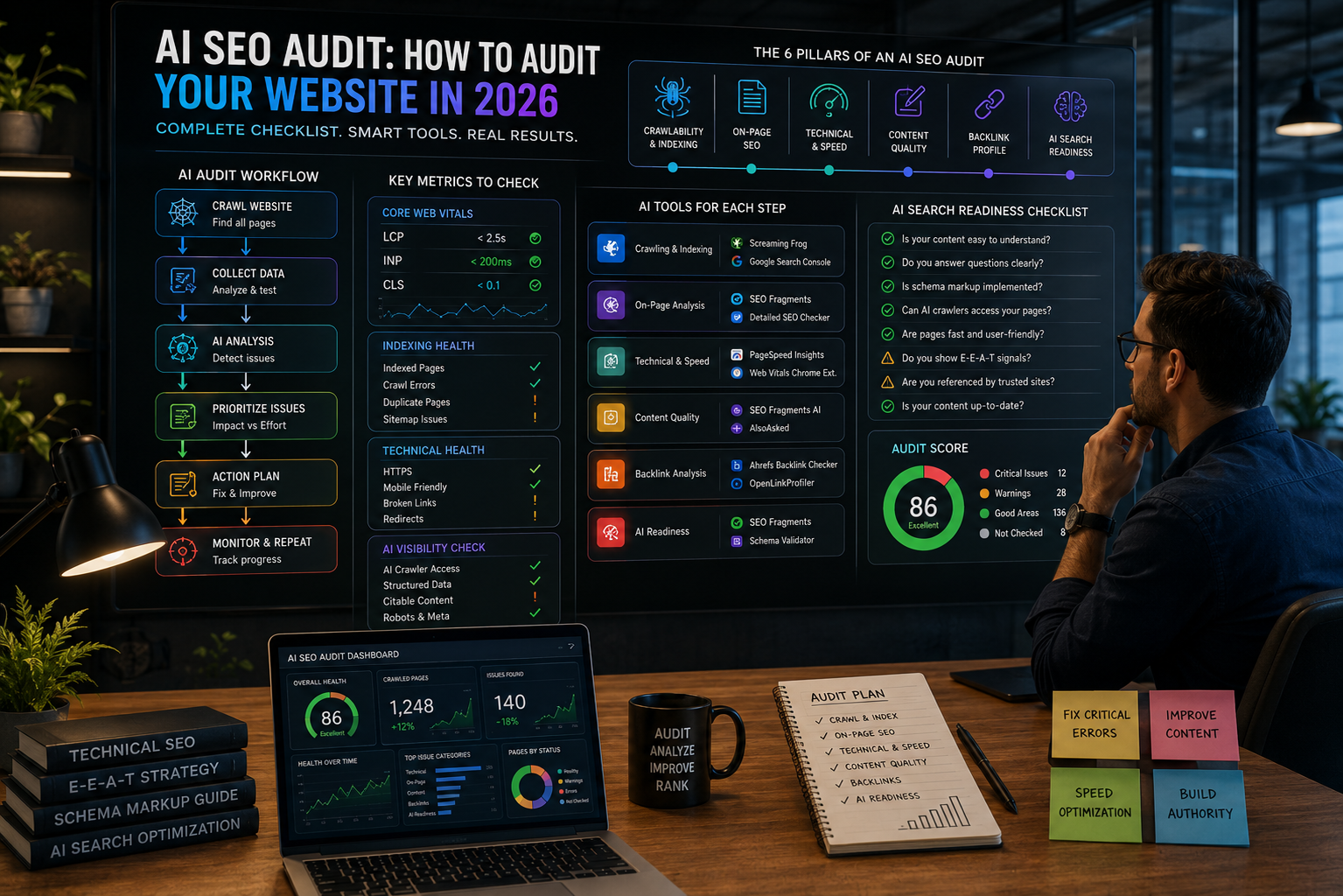
An AI SEO audit uses automated tools to scan your website and find the issues hurting your search visibility. It then ranks those issues by impact. To run one, crawl your site and check indexing and on-page basics. Test Core Web Vitals. Review content and backlinks. Then confirm AI engines can read your pages. AI handles the scanning in minutes. You handle the judgment calls. The result is a prioritized fix list, not a vague sense that something is wrong.
The tools have changed the game. A full manual audit once took a day. Now an AI auditor returns a scored report in under a minute. But speed brings a trap. AI flags what is measurable and misses what needs context. This guide gives you the complete checklist. It maps a free tool to each step. And it shows the parts where a human still wins.
Key takeaways
- An AI SEO audit scans your site and returns a prioritized fix list. It covers crawlability, on-page, technical health, content, backlinks, and AI readiness.
- AI is fast at measurable checks. It is weak at judgment: search intent, content depth, and business context still need you.
- Core Web Vitals have clear pass marks: LCP under 2.5 seconds, INP under 200 milliseconds, CLS under 0.1 (Google web.dev).
- Classic audits miss a new layer. In 2026, your audit must check whether AI engines can crawl and cite your pages.
- Audit technical health monthly. Re-check AI readiness every time you publish a major page.
What is an AI SEO audit?
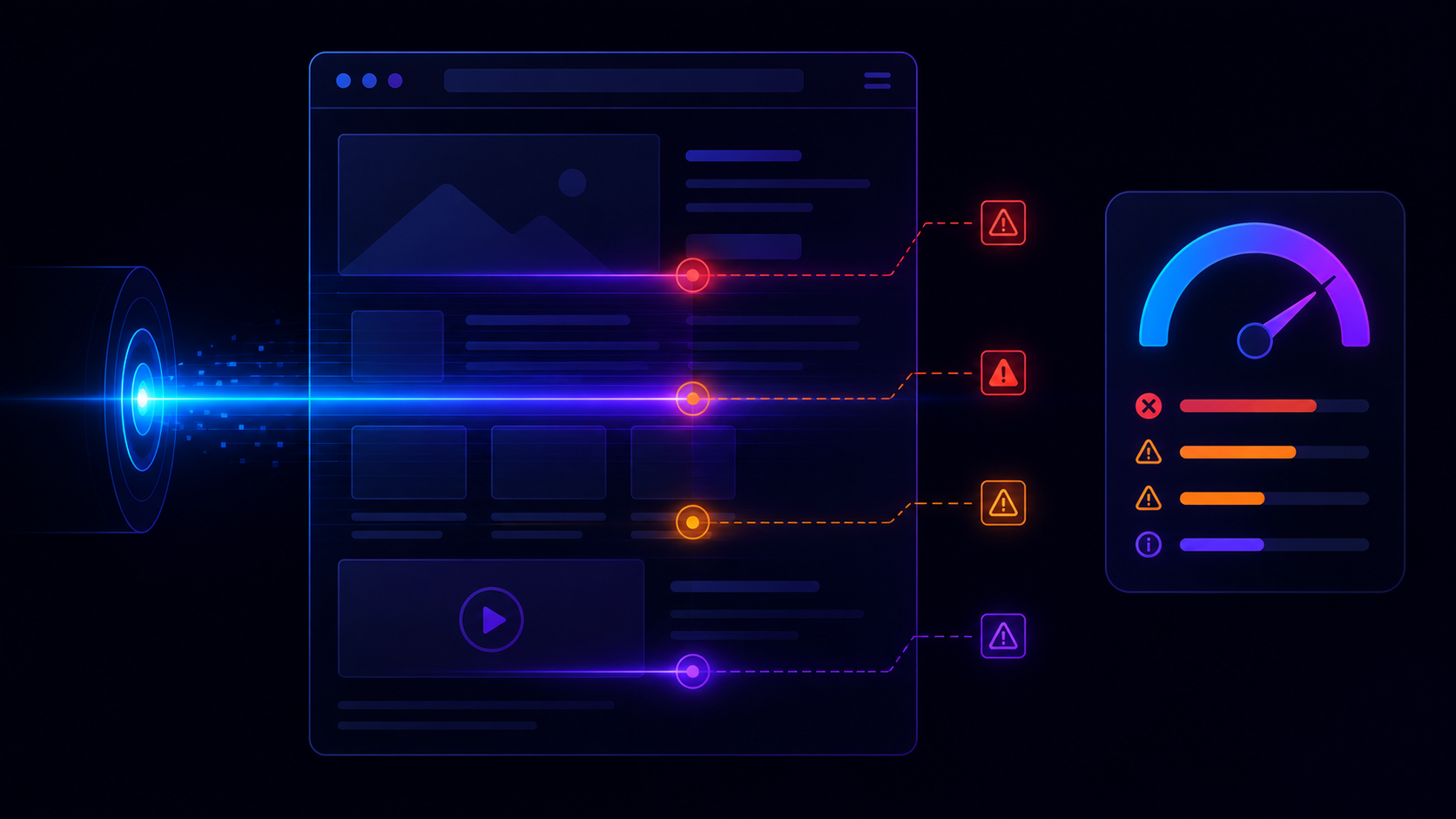
An AI SEO audit is a website review run by automated tools instead of by hand. The tool crawls your pages. It checks them against known ranking factors. Then it returns a report of what is broken and what to fix first.
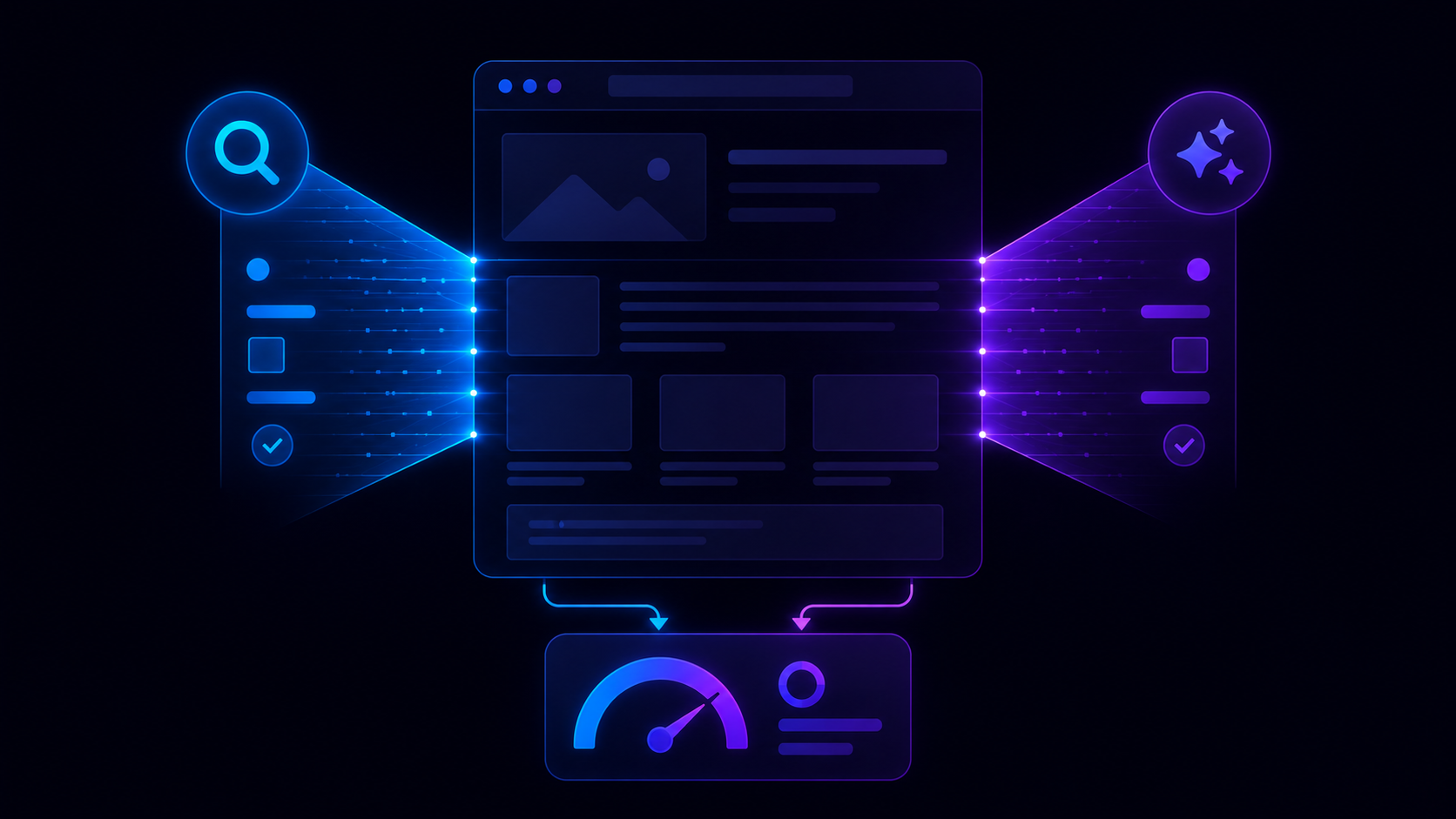
The word "AI" points to two things. First, speed and scale: the tool checks hundreds of pages in the time a person checks one. Second, scope: a modern audit now also asks whether AI answer engines can read your site, not only Google.
A good audit covers six areas. Crawlability and indexing. On-page elements. Technical health and speed. Content quality. Backlinks. And AI search readiness. We will walk through each one.
The output is what matters. A raw list of 200 problems helps no one. A strong audit sorts issues by impact. You fix the few that move rankings first. The many small ones can wait.
Citation capsule: An AI SEO audit is an automated review that crawls your site, checks it against ranking factors, and returns a prioritized list of fixes across crawlability, on-page, technical health, content, backlinks, and AI readiness.
What AI can audit, and what still needs you
AI is not magic here. It is fast at some checks and blind to others. Knowing the split saves you from trusting a score too much.
AI handles the measurable work well:
- Finding broken links, redirects, and crawl errors.
- Checking title and meta length, heading order, and missing alt text.
- Measuring page speed and Core Web Vitals.
- Spotting missing or invalid schema.
- Flagging thin or duplicate pages by word count and similarity.
A human still wins on judgment:
- Search intent. AI sees your keyword. It cannot always tell if your page matches what the searcher wants.
- Content depth. A tool counts words. It cannot judge whether your advice is correct or useful.
- Business context. AI does not know which pages drive revenue, so it cannot weigh fixes by value to you.
- Experience and trust. Real expertise and first-hand proof are hard to score and easy to fake.
So treat the AI report as a smart first pass, not a verdict. It finds the problems worth your attention. You decide which ones matter for your goals. The best workflow pairs a fast machine scan with thirty minutes of human review.
Citation capsule: AI audits excel at measurable checks like broken links, speed, and schema, but search intent, content depth, and business priority still require human judgment.
The AI SEO audit checklist
Here is the full checklist in one view. Each row is a check, a reason, and a free tool to run it. Work top to bottom, since crawl and indexing problems make every other fix pointless.
| Area | What to check | Why it matters | Free tool |
|---|---|---|---|
| Crawl | Robots.txt, redirects, broken links | Blocked pages never rank | Robots.txt validator, Redirect checker |
| Indexing | Are key pages in Google's index? | Unindexed pages earn nothing | Index checker |
| On-page | Titles, meta, headings, alt text | Weak basics cap your ceiling | Meta checker, Heading checker |
| Canonicals | Correct canonical tags, no duplicates | Duplicates split your ranking signals | Canonical checker |
| Speed | Core Web Vitals: LCP, INP, CLS | Confirmed Google ranking signal | See section below |
| Schema | Valid JSON-LD structured data | Helps Google and AI read your page | JSON-LD validator |
| Sitemap | Present, valid, submitted | Guides crawlers to your pages | Sitemap validator |
| Content | Intent match, depth, freshness | Thin content drags the whole site | Human review |
| Backlinks | Authority and toxic links | Trust still influences rank | Domain authority checker |
| AI readiness | Can AI crawlers read and cite you? | The channel most audits miss | GEO score audit |
Do not try to fix everything in one sitting. Run the whole checklist first. Then pick the three issues with the widest impact and start there. A single crawl block can outweigh fifty small on-page tweaks.
The rest of this guide expands the two areas most audits get wrong: Core Web Vitals and AI readiness.
What to fix first: a simple priority order
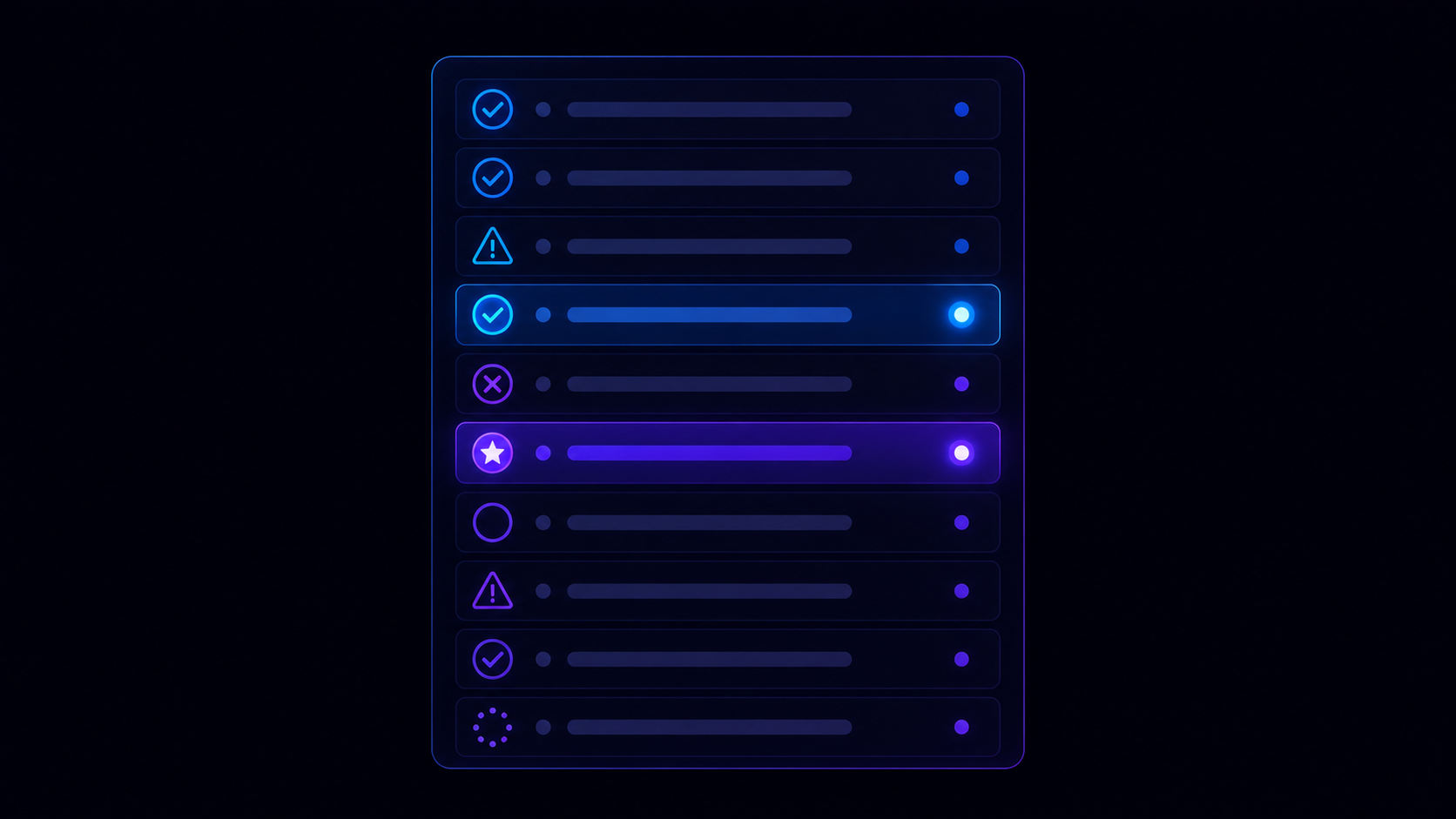
An audit's value is in the order, not the list. A hundred issues with no ranking looks busy and helps little. Sort every finding into three tiers.
P0 — fix now. These block ranking outright. A page Google cannot crawl or index earns nothing, no matter how good it is. Noindex tags on live pages, blocked crawlers, broken canonicals, and server errors all sit here. Clear them first.
P1 — fix this month. These cap your ceiling. Slow Core Web Vitals, weak titles and meta, missing schema, and thin content on important pages belong here. They will not sink you overnight, but they hold you back every day.
P2 — fix when you can. These are polish. A missing alt text on a minor image, a slightly long meta description, one orphaned page. Worth doing, never urgent.
One rule keeps you honest. Weight each fix by the page it lives on. A P1 issue on your top money page beats a P0 issue on a page nobody visits. Impact times traffic, not raw severity, decides your order.
Most AI tools score by severity alone. They cannot see which pages matter to your business. That last judgment is yours, and it is where a human review earns its keep.
Core Web Vitals: the numbers to hit
Speed is not a vibe. Google gives you exact pass marks, and your audit should measure against them. Core Web Vitals are three metrics that score real user experience (Google web.dev).
- Largest Contentful Paint (LCP). How fast the main content loads. Aim for under 2.5 seconds.
- Interaction to Next Paint (INP). How fast the page responds to a tap or click. Aim for under 200 milliseconds. INP replaced the old First Input Delay metric in 2024.
- Cumulative Layout Shift (CLS). How much the layout jumps while loading. Aim for under 0.1.
One detail trips people up. Google measures these at the 75th percentile of your visitors. So a fast average is not enough. Three out of four page loads must clear the mark, on mobile and desktop.
Why start here? Because speed problems hit every page at once. A slow theme or a heavy script drags down your whole site. Fix it once, and the gain spreads everywhere. That is a better return than editing pages one by one.
Test your live field scores with a tool that reads real Chrome user data. Then confirm your key pages load fast for most visitors, not only for you on fast office wifi.
Citation capsule: Google's Core Web Vitals pass marks are LCP under 2.5 seconds, INP under 200 milliseconds, and CLS under 0.1, measured at the 75th percentile of page loads across mobile and desktop.
The AI-visibility layer most audits miss
This is the part that separates a 2026 audit from a 2022 one. Classic audits check whether Google can rank you. They ignore whether AI engines can cite you. That gap is now a real leak.
Search behavior moved. Gartner expects traditional search volume to fall 25% by 2026 (Gartner). More buyers ask ChatGPT and Perplexity directly. If those engines cannot read your pages, you are invisible in a growing channel.
Your audit needs four AI-readiness checks.
1. AI crawler access. Engines send bots like GPTBot, ClaudeBot, PerplexityBot, and Google-Extended. Check that your robots file does not block them. A blocked bot cannot cite you.
2. Answer-first structure. Models lift clean, self-contained passages. Put a direct answer in the first sentence or two of each section. Bury it, and the model skips you.
3. Structured data. Valid schema helps engines parse your entities and questions. FAQPage and Article schema are the high-value ones.
4. Off-site presence. Much of what AI says comes from training data, not live search. Semrush found ChatGPT runs a live web search on only 34.5% of answers (Semrush). So brand mentions across the web matter too.
For the full method, see our guides on how to get cited by AI and the best AEO tools. To score your own site, run a GEO audit or track mentions with the AI Citation Tracker.
Citation capsule: A modern SEO audit must check AI readiness: whether crawlers like GPTBot can access your pages, whether your answers sit in the first sentences, and whether your schema and off-site mentions support citation.
How to run an AI SEO audit, step by step
Here is a workflow you can finish in an afternoon. It moves from scan to fix in a clear order.
Step 1: Run an automated scan. Start with a tool that crawls your whole site and scores it. This gives you the full issue list fast. SEO Fragments' SEO Autopilot does this free. Paste a URL and get a scored report with prioritized fixes in under a minute.
Step 2: Check indexing in Google Search Console. Confirm your important pages are indexed. Look for coverage errors and pages Google chose not to index. This is data no external tool can fully see.
Step 3: Fix crawl and indexing first. Clear blocked pages, broken links, and bad redirects. These problems waste your crawl budget and hide your content. Nothing else matters until they are solved.
Step 4: Repair on-page basics. Rewrite weak titles and meta descriptions. Fix heading order. Add missing alt text. These are quick wins with real impact.
Step 5: Address speed. Tackle your worst Core Web Vitals metric. Compress images, cut heavy scripts, and reserve space for elements so the layout stops shifting.
Step 6: Review content by hand. This is the human step. Open your top pages. Ask if each one answers the searcher's real question better than the pages that outrank it. Improve or merge weak content.
Step 7: Check AI readiness. Confirm AI crawlers are allowed. Add answer-first summaries and schema to your key pages. Then track whether engines start citing you.
Step 8: Re-scan and record. Run the automated audit again to confirm your fixes landed. Save the score as a baseline. Next month, you measure against it.
AI audit vs. manual audit vs. classic tools
Three ways to audit exist today. None is best for everything. Here is how they compare, so you can mix them well.
| Approach | Speed | Strength | Weakness |
|---|---|---|---|
| AI auditor | Minutes | Full-site scan, scored, prioritized | Misses intent, depth, context |
| Manual audit | Hours to days | Judgment, intent, business fit | Slow, easy to miss technical issues |
| Classic crawlers | Hours | Deep technical crawl detail | Steep learning curve, no AI layer |
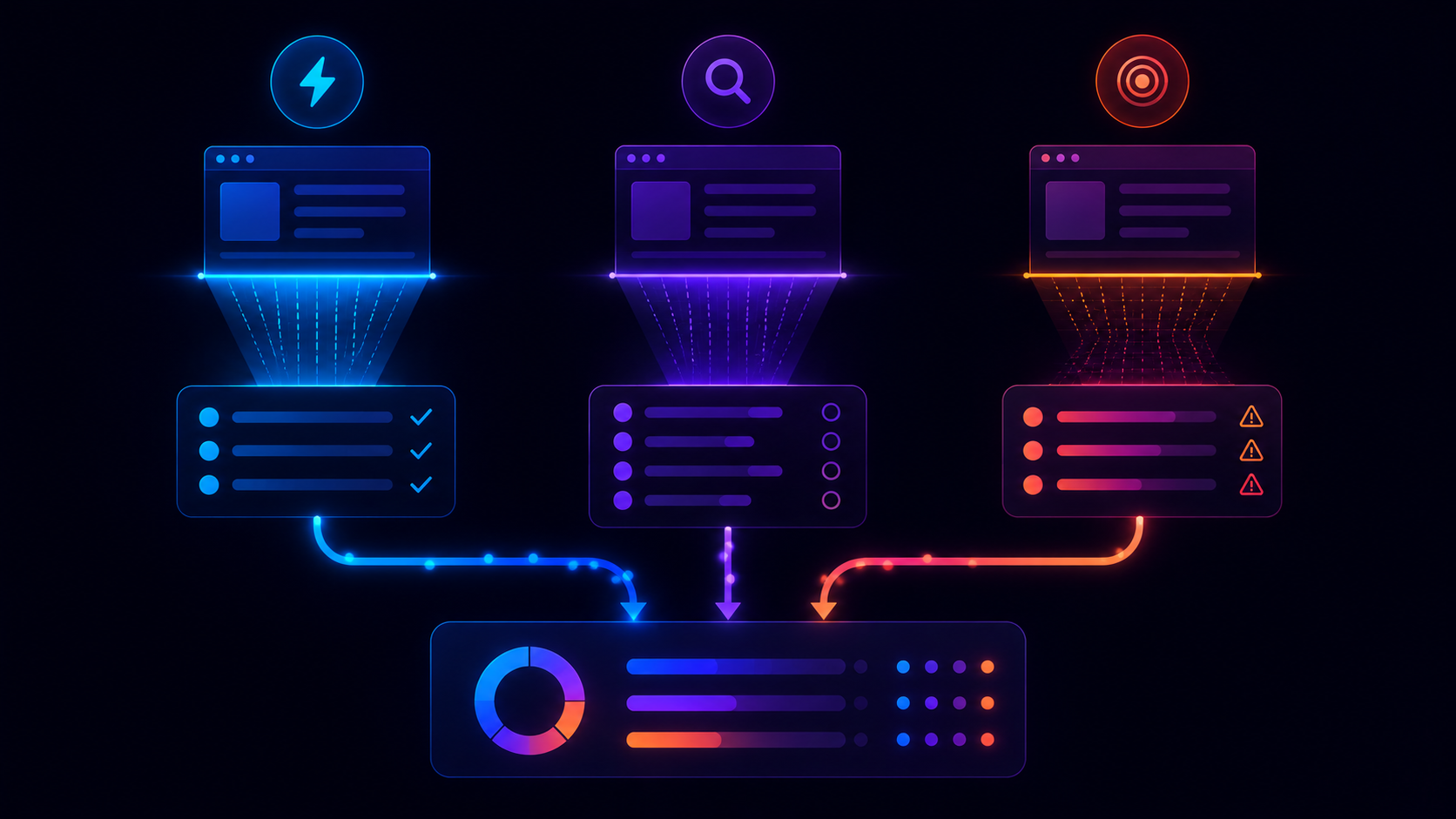
The pattern is clear. An AI auditor gives you breadth and speed. A manual review gives you judgment. A deep crawler gives you technical detail on large sites.
Most solo operators and small teams do not need all three. Start with an AI auditor for the full picture in one minute. Add manual review on the pages that drive revenue. Reach for a heavy crawler only when your site grows past a few hundred pages.
Notice what the older two approaches share. Neither was built for AI search. A manual checklist from 2022 and a classic crawler both stop at Google. That is the gap an AI-aware audit fills, and it is why the tool you pick should check both channels.
How often should you run an SEO audit?
Match the cadence to the type of check. Not everything needs the same schedule.
- Technical health: monthly. Crawl errors, broken links, and speed regressions creep in as you publish and update. A monthly scan catches them early.
- Full audit: quarterly. Once a quarter, run the whole checklist, including content and backlinks. This catches slow drift that a quick scan misses.
- AI readiness: on publish. Every time you ship a major page, confirm crawlers can reach it and the answer sits up top. Waiting a month wastes citation time.
- After any big change. Redesigns, migrations, and platform moves break things silently. Audit right after, not weeks later when traffic has already dropped.
One habit makes all of this easier. Save each audit score. Trends tell you more than a single snapshot. A score sliding down for three months is a warning you can act on before rankings follow.
Common AI SEO audit mistakes
A few habits waste the whole exercise. Watch for these.
Fixing everything at once. A long issue list is tempting to clear top to bottom. Do not. Sort by impact and fix the vital few first. Most low-priority flags barely move rankings.
Trusting the score blindly. A green score is not a ranking guarantee. Tools measure what they can, not what your searchers want. Always add human review.
Ignoring intent. You can pass every technical check and still rank poorly. If your page does not match what people want, no fix helps. Read the pages that outrank you.
Skipping AI readiness. Many audits still stop at Google. In 2026, that leaves citations on the table. Check crawler access and answer-first structure every time.
Auditing once and stopping. SEO is not a one-time cleanup. Sites decay. A single audit ages fast. Set a repeating schedule and stick to it.
No baseline. Without a saved score, you cannot prove a fix worked. Record every audit, so you can measure progress instead of guessing.
Conclusion
An AI SEO audit gives you speed and a clear starting point, not a finished answer. Let the tool find the problems in minutes. Then spend your time on the calls only you can make: intent, depth, and which pages matter to your business. The teams that win pair a fast scan with honest human review, and they check AI readiness alongside Google. Start today with one free scan. Paste your URL into SEO Autopilot, get your scored report, and fix the top three issues this week. Then save the score and audit again next month. That simple loop beats a perfect audit you run only once.
Frequently Asked Questions
What is an AI SEO audit? An AI SEO audit is an automated review of your website. It crawls your pages, checks them against ranking factors, and returns a prioritized list of fixes. It covers crawlability, on-page elements, technical health, content, backlinks, and whether AI engines can read your pages.
How long does an AI SEO audit take? An automated scan returns a scored report in under a minute for most sites. The full process, including human review of content and intent, takes an afternoon. Fixing the issues it finds takes longer and depends on your site's size.
Are AI SEO audits accurate? They are accurate for measurable checks like broken links, speed, and schema. They are weaker on judgment calls like search intent and content quality. Treat an AI audit as a strong first pass, then add human review before you act.
Can I do an SEO audit for free? Yes. Free tools cover most of an audit: crawl checks, meta and heading review, indexing, schema, and Core Web Vitals. SEO Fragments' SEO Autopilot runs a full scored scan free, and its free micro-tools handle each individual check.
What should an SEO audit include in 2026? Crawlability, indexing, on-page elements, Core Web Vitals, content quality, backlinks, and AI search readiness. The AI layer is new. Check whether crawlers like GPTBot can reach your pages, and whether answer engines can cite your content.
How often should I audit my website? Run a technical scan monthly, a full audit quarterly, and an AI-readiness check every time you publish a major page. Also audit right after any redesign or migration, since those changes often break things silently.
What are Core Web Vitals thresholds? For a good score, LCP should load in under 2.5 seconds, INP should respond in under 200 milliseconds, and CLS should stay below 0.1. Google measures these at the 75th percentile of your visitors, across mobile and desktop.
Building 120+ free AI-powered SEO tools — every article is written and tested with them. About us
Try the tools we used
All articles are written with SEO Fragments. Sign in free and use the same tools.
Get started free →Read next
- Generative Engine Optimization: How to Get Cited by AITo get cited by AI, give answer engines content they can quote and trust. Lead each section with a direct answer. Back it with real statistics, quotes, and nam…
- Answer Engine Optimization: Prepare Content for AI SearchLearn Answer Engine Optimization (AEO) to help AI search engines understand, trust, and cite your content across ChatGPT, Google AI, Gemini, and Perplexity.
- The 9 Best AEO Tools to Track AI Citations in 2026The best AEO tools in 2026 are Profound, Otterly.AI, Peec AI, Scrunch AI, SE Ranking, Semrush AI Toolkit, Ahrefs Brand Radar, Nightwatch, and SEO Fragments. Ea…